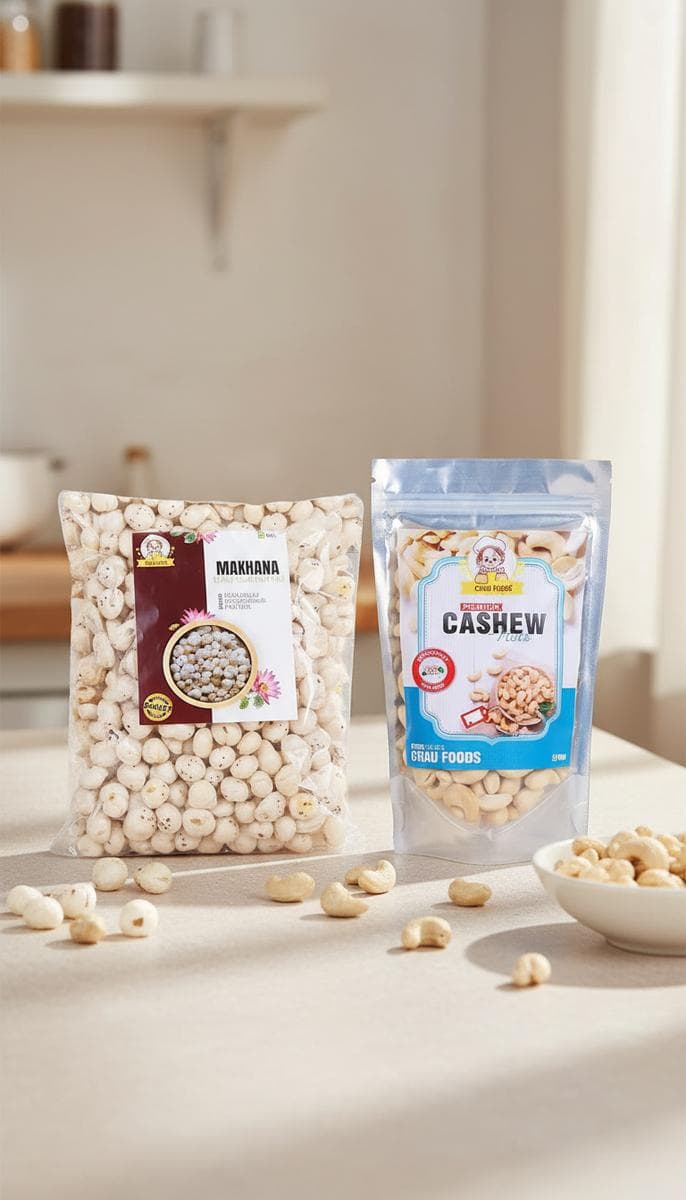
Why Packaging Matters More Than You Think
In the dry fruits business, your packaging is often the first thing a customer sees — and it directly affects whether they buy from you again. Good packaging does three things: it preserves freshness (dry fruits go stale quickly if exposed to moisture), it builds brand perception (premium packaging = premium pricing), and it meets legal requirements (FSSAI mandates specific labelling).
Whether you are a small retailer repackaging bulk products, an online seller shipping across India, or a wholesaler supplying to shops — this guide covers everything you need to know about dry fruits packaging in 2026.
---
The Business Case for Better Packaging
Most dry fruits business owners treat packaging as an afterthought — a cost to be minimized. This is a mistake that costs you 20-30% in potential revenue. Here is what the data shows:
---
Types of Packaging for Different Business Models
For Retail Shops
Retail packaging must balance visibility (customers want to see the product), protection (prevent moisture and pest contamination), and branding (your label must stand out among competitors on the shelf).
For Online Sellers (Amazon, Flipkart, Website)
Online packaging has a unique challenge: your product must survive 3-7 days of transit across India's delivery network, enduring drops, stacking pressure, and temperature fluctuations. The unboxing experience also matters because online customers form their brand impression at the moment of opening.
For Wholesale/Bulk
Wholesale packaging prioritizes protection during long-distance transport, ease of handling for warehouse workers, and clear labelling for B2B buyers who need batch information.
---
Understanding Packaging Materials for Dry Fruits
Choosing the right material is critical because dry fruits are sensitive to moisture, oxygen, light, and temperature. Here is a breakdown of common materials and their properties:
| Material | Moisture Barrier | Oxygen Barrier | Light Barrier | Cost | Best For |
|---|---|---|---|---|---|
| BOPP (Biaxially Oriented Polypropylene) | High | Medium | Low | Rs 2-5/pouch | Budget retail packs |
| Metallized BOPP | Very High | High | High | Rs 4-8/pouch | Seeds, makhana, flavoured products |
| PET/PE Laminate | Very High | Very High | High | Rs 6-12/pouch | Premium almonds, cashews, walnuts |
| Aluminium foil laminate | Excellent | Excellent | Excellent | Rs 8-15/pouch | Highest-value products, long shelf life |
| Kraft paper (lined) | Medium | Low | Medium | Rs 3-6/bag | Eco-friendly retail, organic brands |
| Glass | Excellent | Excellent | Low (clear) | Rs 15-40/jar | Premium display, gifting |
Rule of thumb: The higher the fat content of the dry fruit, the better your oxygen and light barrier needs to be. Walnuts (65% fat) need aluminium foil laminates, while raisins (0.5% fat) are fine in standard BOPP.
---
FSSAI Labelling Requirements (Mandatory)
Every packaged dry fruit product MUST display the following. Non-compliance can result in fines up to Rs 5 lakh and product seizure. Do not skip this.
Common FSSAI Labelling Mistakes to Avoid
---
Cost Breakdown: Packaging Per Unit
| Package Type | Size | Cost per Unit | MOQ | Shelf Life Impact |
|---|---|---|---|---|
| Ziplock pouch (printed) | 250g | Rs 3-5 | 1000 | 3-4 months |
| Ziplock pouch (printed) | 500g | Rs 5-7 | 1000 | 3-4 months |
| Ziplock pouch (printed) | 1kg | Rs 7-10 | 500 | 3-4 months |
| Nitrogen flush pouch | 200g | Rs 8-12 | 500 | 6-9 months |
| Metallized stand-up pouch | 250g | Rs 6-10 | 500 | 5-8 months |
| Gift box (premium) | 500g | Rs 25-50 | 200 | 4-6 months |
| Gift tray (5 compartments) | 1kg | Rs 80-150 | 100 | 3-4 months |
| HDPE wholesale bag | 5kg | Rs 10-15 | 200 | 4-6 months |
| Vacuum sealed bag | 1kg | Rs 12-20 | 300 | 8-12 months |
| Corrugated shipper box | fits 5kg | Rs 12-20 | 100 | N/A (outer protection) |
---
Branding Tips That Increase Sales
1. Use transparent windows — Customers want to see the actual product. A clear window showing large, uniform almonds sells better than a fully printed pouch. Studies show transparent packaging increases purchase intent by 30% for premium dry fruits because quality is immediately visible.
2. Print nutritional benefits on the front — Add a small section like "Rich in Vitamin E, Protein & Healthy Fats" on the front face. This converts health-conscious buyers who scan shelves quickly. Use icons rather than text blocks — a small protein icon with "21g Protein/100g" is more impactful than a paragraph.
3. Keep colors warm and earthy — Gold, brown, cream, deep green, and amber work best for dry fruits. These colors signal natural, premium quality. Avoid neon or flashy colors — they signal cheap, artificial products. Black packaging works well for ultra-premium positioning (think luxury chocolate brands).
4. QR code on every pack — Link to your website, WhatsApp, or product page. This converts offline customers to online repeat buyers. QR codes cost nothing to print but can drive 10-15% of retail buyers to your direct channel where you earn higher margins. Track scans using a dynamic QR code service.
5. Custom packaging for gifting seasons — Festival season (Oct-Dec) accounts for 30-40% of annual dry fruits sales. Having ready gift boxes, hamper baskets, and festive-themed pouches during this period is essential. Design festive packaging by August — printing lead times mean September is too late.
6. Include usage instructions — Most customers do not know the correct daily portion, soaking methods, or recipes. A small "How to enjoy" section on the back panel adds value and differentiates your brand from competitors who only list nutritional information.
7. Weight verification sticker — Print a sticker that says "Net Weight Verified — Packed by [Your Brand]." This addresses the most common customer anxiety about dry fruits: getting less weight than advertised. It builds trust instantly.
---
Designing Your First Custom Pouch: Step-by-Step
If you are creating branded packaging for the first time, here is the process:
---
Packaging for Specific Dry Fruit Categories
Different dry fruits have different packaging needs based on their physical properties:
Almonds and Cashews
These are your flagship products and demand the best packaging. Use PET/PE laminate with a clear window on the front. Include desiccant sachets inside for humidity control during monsoon season. The window must show the product clearly — customers judge almond quality by size and colour.
Walnuts
Walnut kernels oxidize rapidly because of their 65% fat content. Always use metallized or aluminium foil laminate pouches. Nitrogen flushing is strongly recommended. Avoid clear packaging — light accelerates rancidity. Store date is more important for walnuts than any other dry fruit.
Seeds (Chia, Flax, Pumpkin, Sunflower)
Seeds are small, so they settle during shipping. Use pouches with flat bottoms (gusseted stand-up pouches) to maintain an upright display. Nitrogen flushing is essential for flax seeds, which contain 42% fat. Include "grind before eating" instructions for flax seeds on the label.
Makhana (Fox Nuts)
Makhana is extremely sensitive to moisture — it loses its signature crunch within days if the packaging seal fails. Use metallized BOPP with nitrogen flushing. The pouch must have a strong, reliable seal. Test your seal by squeezing the filled pouch — air should not escape. Makhana's light weight means packaging cost is a higher percentage of total product cost.
Raisins and Dates
These products are sticky and can clump. Use food-grade LDPE inner liners. Anti-caking sachets help prevent raisins from sticking together. Dates should be packed in trays or rigid containers to prevent crushing.
---
Where to Source Packaging Materials
Major packaging suppliers in India:
Pro tip: Negotiate annual contracts with 2-3 vendors instead of buying per-order. Annual commitments get you 15-20% lower rates and priority during peak season (September-November) when every dry fruits brand is scrambling for packaging.
---
Need Premium Dry Fruits for Your Packaging Business?
Whether you are starting a new brand or expanding your product line, Chau Foods supplies premium quality dry fruits, nuts, seeds, and flavoured makhana in bulk with custom packaging and private labelling available. FSSAI certified, pan-India delivery.
Get wholesale pricing → | WhatsApp us
About the Author
Chau Foods Editorial Team
This guide is written and fact-checked by the Chau Foods editorial team — a small group of FSSAI-certified food specialists based in Rohini, Delhi. Led by founder Mohit, the team combines direct farm-sourcing experience (California almonds, Bihar makhana from Darbhanga & Madhubani, Kashmir walnuts, Kerala spices) with hands-on quality control at the Chau Foods packing facility. We publish only what we would feed our own families, cite Indian nutrition data where relevant, and refresh every article when sourcing, pricing, or health guidelines change.
- Credentials
- FSSAI Lic. 13321008000704
- Based in
- Rohini, Delhi · since 2020
- Rating
- 4.9/5 · 27+ Google reviews
Keep Exploring
Shop related collections and next steps
Use this guide to compare options, then move directly into the most relevant collection, brand story, or bulk-order path.
Dry Fruits Collection
Browse premium dry fruits and pantry-friendly staples selected for everyday snacking.
Shop the collectionWhy Chau Foods
Learn more about our sourcing, freshness standards, and the quality promises behind each product we ship.
Read our storyBulk & gifting help
Need larger quantities, office snacks, festive gifting, or repeat ordering support? Start with our bulk orders page.
Start a bulk enquiryWant to Buy in Bulk?
Get wholesale prices for premium dry fruits delivered to your doorstep.
FSSAI Certified| 500+ Business Partners| Pan-India Delivery